
Top 3 Live Streaming Cameras for Education, Medical, and Broadcasting: 2026 Picks
Top 3 Live Streaming Cameras for Education, Medical, and Broadcasting: 2026 Picks
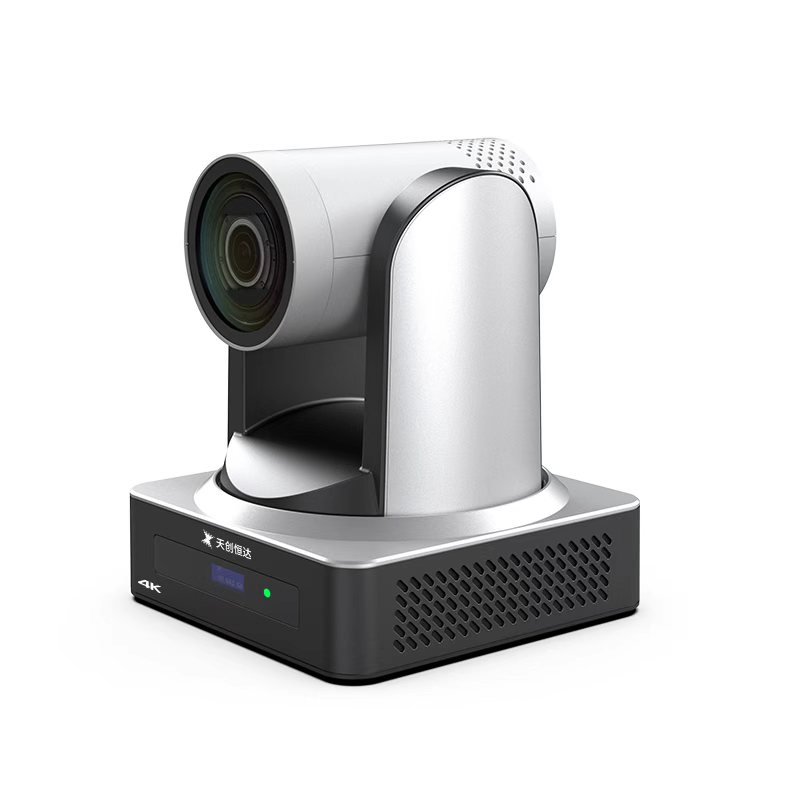
Three TCHD Video live streaming cameras cover most professional deployment profiles heading into 2026: the TC-980S ranks first for broadcasting and certification-sensitive projects, the TC420 ranks second for pan-tilt-zoom rooms in hybrid teaching, conferencing, and medical training, and the TCHD-T3 ranks third for fixed classroom, lecture, and e-commerce capture. The order follows three measurable criteria — output and interface fit, physical coverage and control, and documented certification — and every specification below comes from the manufacturer's published model data and certificate records rather than from marketing copy.
Why the Best Live Streaming Camera Depends on the Room
A live streaming camera that performs well in a broadcast gallery can be the wrong choice for a classroom, and a camera simple enough for a lecturer to operate may lack the interfaces a medical training suite requires. The three deployment types compared here pull in different directions:
- Education and lecture capture values simple USB connectivity, quiet PTZ movement, preset recall, and stable images under mixed indoor lighting.
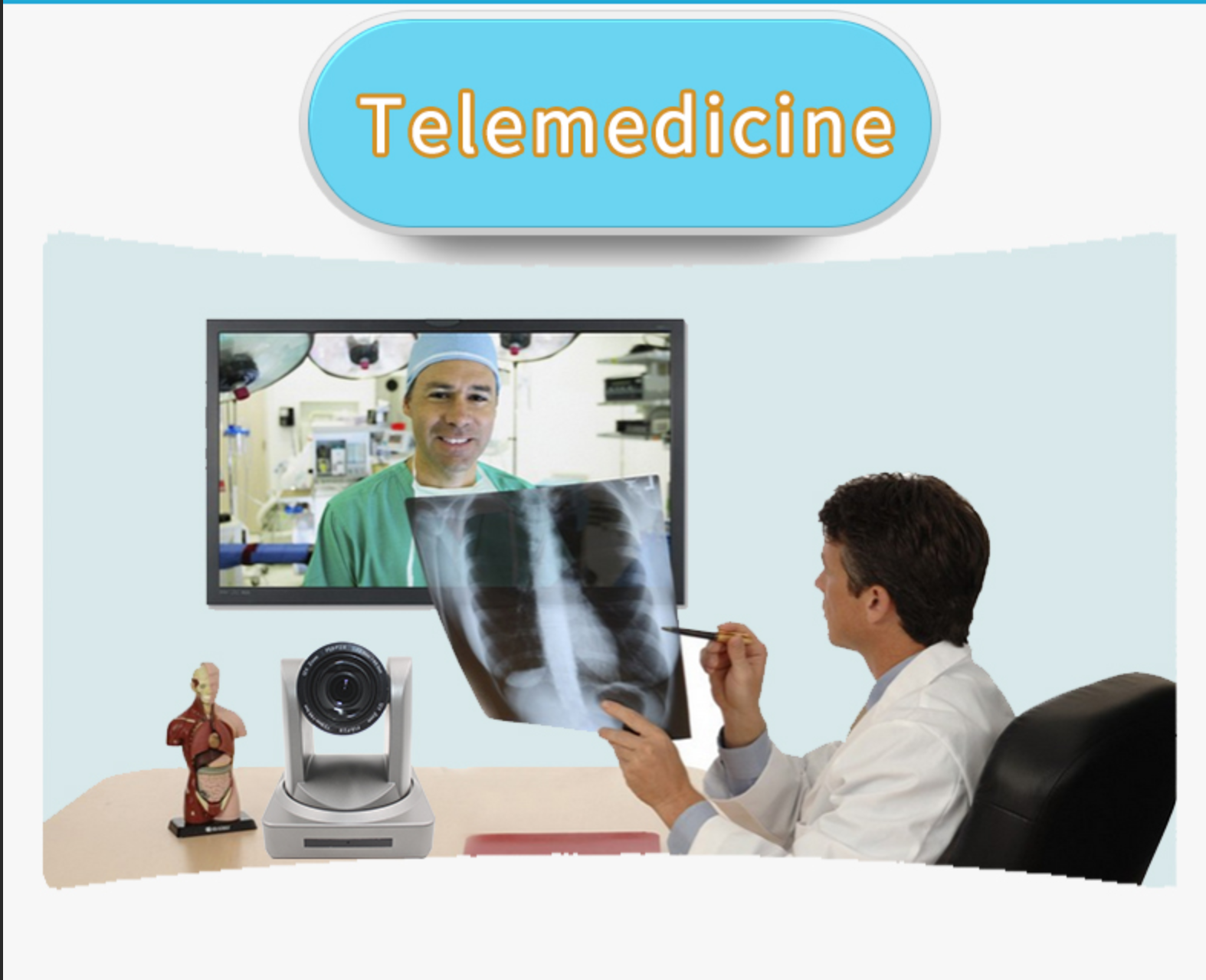
- Medical teaching values low-noise imaging, enough optical zoom to capture close-up detail, and stable continuous operation — and it usually sits inside a clinical procurement process that asks additional questions about electrical safety standards.
- Broadcasting and event streaming values dedicated SDI and HDMI output paths, high-bitrate encoding, and control protocols that integrate with existing switchers and joystick controllers.
Because those requirement sets only partially overlap, a useful ranking has to state which criterion each camera wins on and where it stops being the right answer. That is the framework used below. No price ranking is included, because no verified price data is published for these three models.
Industry Background: What Is Shifting in Live Streaming Camera Demand
Demand for live streaming cameras continues to expand. A 2025 industry forecast places the global live streaming camera market at USD 3.35 billion, growing at a CAGR of 8.8% toward USD 7.79 billion by 2035. Within conference and meeting environments, PTZ cameras are estimated to account for 38.5% of global conference camera revenue in 2025, according to Metastat Insights — a share that reflects how often buyers now need remote framing rather than a fixed shot.
Manufacturing capacity remains concentrated in China, where television and digital camera production reached 749 million units in 2024, valued at approximately USD 16.5 billion (IndexBox). Hardware also continues to dominate the video conferencing category: video conferencing hardware, including cameras, accounted for 46% of total video conferencing market revenue in 2024, according to Grand View Research. Meanwhile, the USB conference camera segment is consolidating around a small number of large vendors — Omdia reported that Logitech held the largest share of that category as of 2024, in a year when sector revenue declined 14% year over year.
For specialist buyers, that consolidation makes specification-level evaluation more important, not less. The meaningful differences between models now sit in zoom range, output interfaces, protocol support, tracking behaviour, and certification coverage — not in headline resolution.
TCHD Digital Video Technology Development (Beijing) Ltd, trading as TCHD Video, is one of the specialist manufacturers operating in this segment. Established in 2005, the company runs a 10,000 m² facility with 50 employees, a 10-engineer R&D team, and an annual output of approximately 4,000 units. Exports account for 20% of sales, with main markets in the EU, USA, and Asia, and the product range covers live streaming cameras, video capture cards, video converters, video encoders, and video switchers.
The Top 3 Live Streaming Cameras for 2026
#1 — TC-980S: Broadcasting and Compliance-First Deployments
The TC-980S is the highest-capability camera in this group and the only one whose certificate record covers quality management, environmental management, and CE EMC compliance at the same time. It is built around a 1/2.8-inch CMOS sensor with 8.42M effective pixels in 16:9 and is offered with 12X, 20X, or 30X optical zoom alongside 16X digital zoom. On the 12X configuration, focal length runs from f=4.1 mm to f=49.2 mm with an aperture range of F1.8–F2.68, and minimum illumination is 0.5 Lux at F1.8 with AGC on.
What separates it for broadcast work is the output architecture. HDMI delivers up to 3840×2160 along with 1920×1080P60/59.94/50/30/29.97/25 and 1280×720P60/59.94/50. SDI carries 1920×1080P60/59.94/50/30/29.97/25, 1080I60/50/59.94, and 720P at 60/59.94/50. USB 3.0 handles MJPG, H.264, H.265, YUY2, and NV12, while the LAN interface runs master and sub code streams in H.264/H.265 at bitrates from 64 to 40960. The frame rate is configurable from 1 to 50 fps in 50 Hz environments and 1 to 60 fps in 60 Hz environments.
Two optional features matter for production teams: NDI and Dante AV. When the Dante AV-H codec option is fitted, the camera transports H.264 video at 1920×1080 and 1280×720 in 60/50/30/25 fps, with latency of 120 ms or less at 1080p60 and bandwidth of 4–8 Mbps at 1080p60. Networking is a 1000M Ethernet port with optional PoE+ support, and the supported protocol set includes RTSP, RTMP, ONVIF, GB/T28181, and SRT, plus a network VISCA control protocol and remote upgrade, reboot, and reset.
Mechanically, the TC-980S pans from -170° to +170° and tilts from -30° to +90°, with pan control speed from 0.1°/s to 60°/s and tilt speed from 0.1°/s to 30°/s. Up to 255 preset positions can be stored, with 10 reachable from the remote control. A monocular tracking system adds four modes — real-time tracking, stage tracking, area tracking, and intelligent framing — with a maximum tracking distance of up to 18 metres. Power consumption is listed at 18 W or less from a DC 12 V supply with an AC 110–220 V adapter.
The certification record is the strongest in this comparison. The TC-980S is certified to the quality management system standard GB/T19001-2016/ISO9001:2015 under certificate number 064-24-Q-0675-R1-S, to the environmental management system standard GB/T24001-2016/ISO14001:2015 under certificate number 064-24-E-0676-R1-S (both issued by BEIJING STANDARD CERTIFICATION CENTRE), and to CE EMC standards EN 55032:2015/A1:2020 and EN 55035:2017/A11:2020 under certificate number LCSA07075157E, issued by LCS TESTING LABORATORY. All three are recorded as applicable to the EU market.
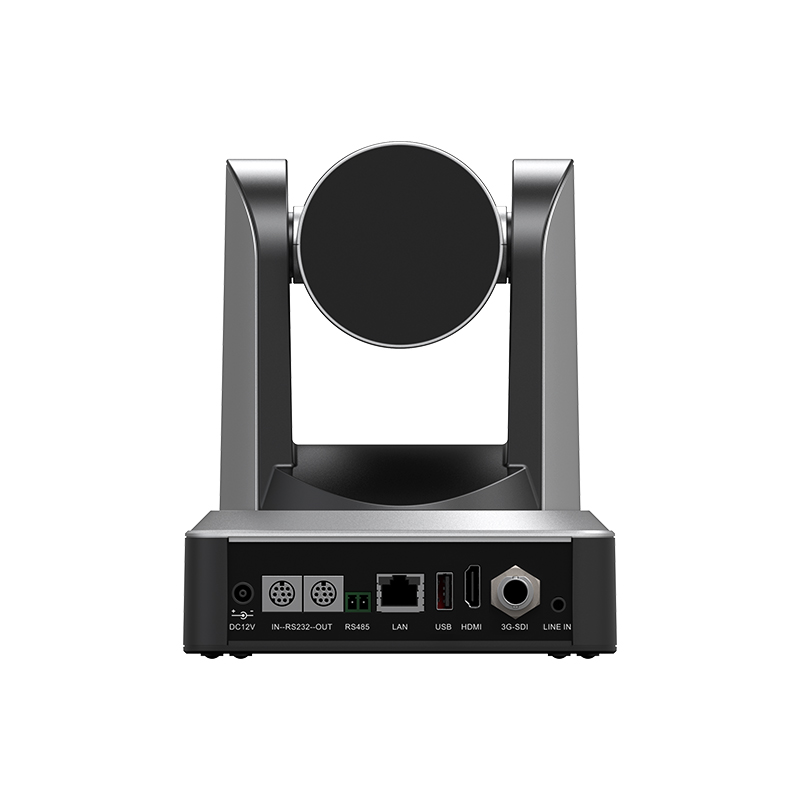
Where it stops being the right answer: if you only need a USB camera feeding a laptop for a single-person webcast, the SDI path, the 4K-capable output, and the optional NDI and Dante AV transport are configuration and cost you will not use. Buyers should also confirm which zoom variant and which optional modules are quoted, because the 12X, 20X, and 30X configurations differ in focal length and aperture.
One recorded deployment supports the education and medical use case: a 20-unit teaching live streaming deployment for government, hospital, school, and YouTube-channel clients in Germany, Australia, and Malaysia, using the TC-980S, was reported after two years of operation as stable, without noise, and with automatic tracking working as intended.
#2 — TC420: PTZ Rooms, Hybrid Teaching, and Medical Training
The TC420 ranks second because it delivers the most complete control interface set of the three models at the lowest stated power draw, while matching the TC-980S on the PTZ envelope. It uses a 1/2.8-inch HD CMOS sensor with 8.29M effective pixels in 16:9, 12X optical zoom, 15X digital zoom, a focal length of 3.9–46.8 mm (±5%), and an iris range of F1.6–F2.8 (±5%). The horizontal viewing angle spans 6.5° at the telephoto end to 70.9° at the wide end, and minimum illumination is 0.5 Lux at F1.8 with AGC on.
Video outputs cover HDMI (4KP30, 4KP25, 1080P60/50/30/25, 720P60/50, plus 1080P59.94/29.97 and 720P59.94), SDI (1080P60/50/30/25, 720P60/50, plus 1080P59.94/29.97 and 720P59.94), USB 3.0 (MJPG, H.264, YUY2, NV12), and LAN in H.264/H.265. The LAN port is a 10M/100M/1000M adaptive Ethernet port with PoE support and audio and video output. Audio is handled through dual 3.5 mm line inputs with AAC, MP3, or G.711A compression, and audio output is available over HDMI, SDI, LAN, and USB 3.0.
Control is where the TC420 separates itself. It provides RS232-IN, RS232-OUT, and RS422 (compatible with RS485) alongside VISCA, Pelco-D, and Pelco-P protocols, with supported baud rates of 115200, 38400, 9600, 4800, and 2400 — the interface combination that integrators need when a room already has a joystick controller or a third-party control system. Network protocol support covers RTSP, RTMP, ONVIF, GB/T28181, VISCA OVER IP, IP VISCA, RTMPS, and SRT, with remote upgrade, reboot, and reset.
PTZ behaviour is nearly identical to the TC-980S: pan from -170° to +170°, tilt from -30° to +90°, pan speed from 0.1°/s to 60°/s, tilt speed from 0.1°/s to 45°/s, preset speed of 60°/s on pan and 45°/s on tilt, and up to 255 presets with 10 via remote control. The tilt speed is the fastest of the three, and total power consumption is listed at under 12 W — the lowest in this group — drawn from a DC 12 V ±10% input with under 1 A current and an AC 110–220 V adapter. Signal-to-noise ratio is greater than 50 dB, with 2D and 3D digital noise reduction, and shutter speed selectable from 1/25 to 1/20000.
Certification for the TC420 covers the quality management system standard GB/T19001-2016/ISO9001:2015 under certificate number 064-24-Q-0675-R1-S, occupational health and safety management to GB/T45001-2020/ISO 45001:2018 under certificate number 064-24-S-0677-R1-S (both issued by BEIJING STANDARD CERTIFICATION CENTRE), and CE EMC coverage under certificate number LCSA07075157E. All are recorded as applicable to the EU market.
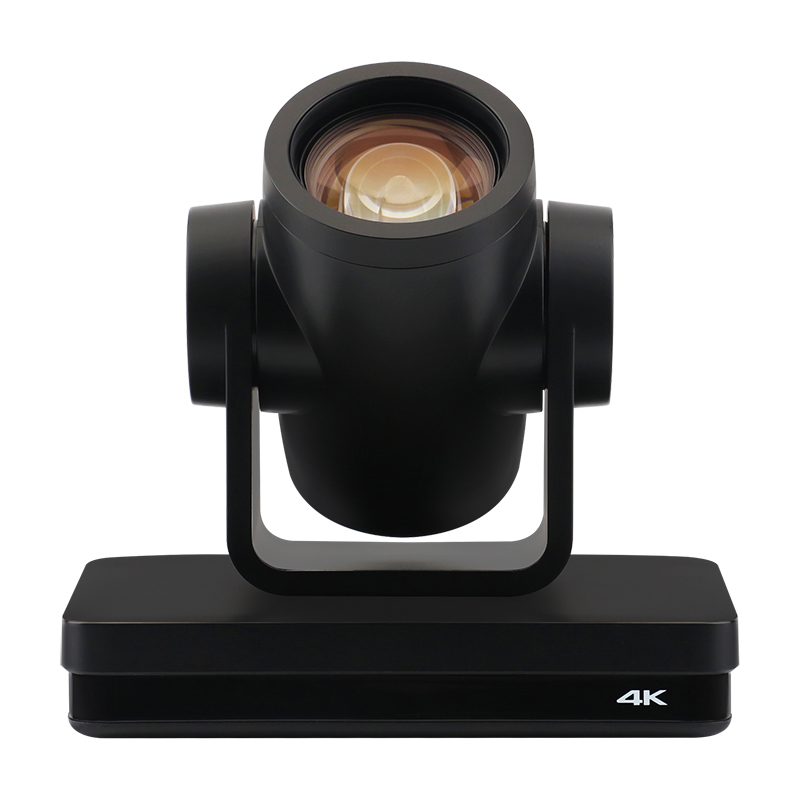
Its limitations are worth stating plainly. SDI output stops at 1080P60, and HDMI 4K is available at 30 and 25 fps rather than 60 fps. If a broadcast workflow requires 4K over SDI, the TC420 is not the correct model. It also lacks the monocular tracking modes found on the TC-980S, so rooms that depend on automatic presenter tracking should weigh that difference.
#3 — TCHD-T3: Classroom, Lecture, and E-commerce Capture
The TCHD-T3 is a native 1080P camera rather than a 4K platform, and that is the reason it ranks third on overall capability ceiling while remaining the most straightforward of the three to integrate. It uses a 1/2.8-inch CMOS sensor with 2.07M effective pixels and a stated video system of 1080P at 60/50/30/25 fps, 1080i at 60/50 fps, and 720P at 60/50 fps. The lens offers 12x optical zoom from f3.5 mm to f42.3 mm with an F1.8–F2.8 aperture, plus 16x digital zoom. Horizontal angle of view runs from 72.5° to 6.9° and vertical angle of view from 44.8° to 3.9°, with minimum illumination of 0.5 Lux at F1.8 with AGC on.
Its headline specification advantage is image stability: the video signal-to-noise ratio is rated at 55 dB or higher, the highest figure among the three models. Combined with 2D and 3D digital noise reduction and a shutter range of 1/30 s to 1/190 s, that rating is directly relevant to lecture capture, where clean speech intelligibility and low visible grain in dim classrooms matter more than maximum resolution. The camera supports 255 presets, horizontal and vertical flip, image freeze, and a vertical/horizontal screen button for orientation switching.
Interfaces are built for plug-and-play rather than for production trucks: one USB 3.0 Type-C port, one USB 2.0 Type-A port, one HDMI 1.4b output, one RJ45 10M/100M adaptive Ethernet port with PoE support, a 3.5 mm line input, and a JEITA-type DC 12 V power jack. USB video communication is compliant with UVC 1.1 to 1.5 and supports UVC PTZ control, with driver support listed for Windows 7, Windows 8, Windows 10, Mac OS X, Linux, and Android. Bitrate is adjustable from 32 Kbps to 20480 Kbps with CBR or VBR control, audio is AAC at 96, 128, or 256 Kbps, and the supported protocols include TCP/IP, HTTP, RTSP, RTMP, ONVIF, DHCP, and multicast.
Certification recorded for the TCHD-T3 covers the quality management system standard GB/T19001-2016/ISO9001:2015 under certificate number 064-24-Q-0675-R1-S and occupational health and safety management system certification under certificate number 064-24-S-0677-R1-S, both issued by BEIJING STANDARD CERTIFICATION CENTRE and applicable to the EU market. A CE EMC entry does not appear in this model's certificate record in the same way as it does for the TC-980S and TC420, so buyers whose projects require a model-specific EU EMC attestation should confirm that requirement with the supplier before ordering.
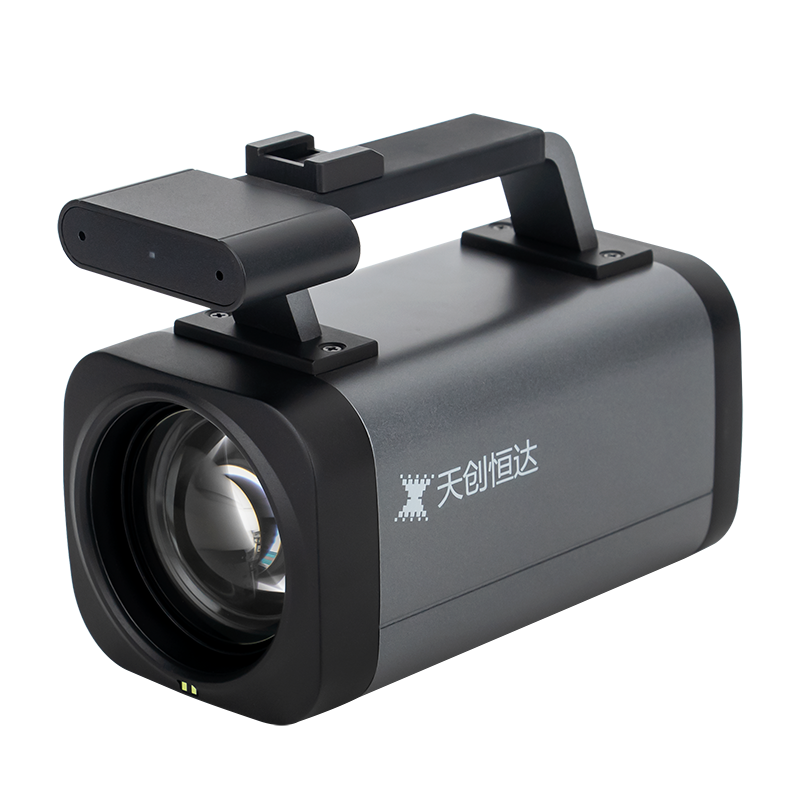
Where it stops being the right answer: there is no SDI output and no 4K mode, and its published specification does not list a pan/tilt degree range. Projects that need long cable runs to a broadcast switcher, or that need 4K capture, should move to the TC420 or TC-980S.
Step-by-Step: How to Validate a Live Streaming Camera Before You Buy
The following sequence uses the three models above as working examples, but the logic applies to any live streaming camera purchase in these sectors.
- Define the output path before comparing models. Decide whether the signal reaches your platform over USB, HDMI, SDI, or the network. A classroom laptop setup can be satisfied by the TCHD-T3's USB 3.0 Type-C and UVC support. A broadcast switcher needs the SDI path that the TC420 and TC-980S provide. A networked production might use the TC-980S's RTSP, RTMP, SRT, ONVIF, and optional NDI or Dante AV transport instead.
- Match resolution and frame rate to what you actually publish. If your output is 1080P60, a native 1080P camera such as the TCHD-T3 removes unnecessary cost and complexity. If you need 3840×2160 for archive or large-venue display, the TC-980S HDMI output and LAN master code stream cover that, while the TC420 offers 4K over HDMI at 30 and 25 fps.
- Check the PTZ envelope against the room. Measure the furthest speaker position and the widest seating spread. The TC420 and TC-980S both cover -170° to +170° pan and -30° to +90° tilt with up to 255 presets — enough for most lecture halls and training rooms. Preset recall also determines how much operator attention a session needs.
- Verify protocol and control compatibility. Confirm that your streaming server accepts RTSP, RTMP, SRT, or ONVIF, and that your control system speaks VISCA, Pelco-D, or Pelco-P over RS232, RS422, or IP. The TC420's RS232-IN, RS232-OUT, and RS422 interfaces, with baud rates from 2400 to 115200, are designed for exactly this kind of integration.
- Confirm certification documents for your market and sector. For EU-bound projects, ask for the certificate number and the standard it was issued against. Verified examples in this group include ISO 9001 under 064-24-Q-0675-R1-S, ISO 14001 under 064-24-E-0676-R1-S, ISO 45001 under 064-24-S-0677-R1-S, and CE EMC under LCSA07075157E to EN 55032:2015/A1:2020 and EN 55035:2017/A11:2020. Note that medical electrical equipment, including surgical cameras, generally falls under the IEC 60601-1 series for basic safety and essential performance — a separate requirement from the certifications listed here, and one that clinical buyers should raise early.
- Check environmental and duty-cycle limits. TCHD Video lists an operating range of -10°C to +50°C and 20% to 80% humidity for indoor use, with 24/7 operation supported. Confirm the mounting position, cable type, and cable length before installation; the matched accessories listed are HDMI cable, SDI cable, and power adapter.
- Order one unit and validate it with your own cabling and controller. A minimum order quantity of 1 unit allows a single-camera evaluation, and 100% product testing is applied before shipment. Lead time for orders is stated as 30 to 45 days, so build that window into your project schedule.
Use Cases: Matching Each Camera to a Real Deployment
- University lecture capture and classroom recording. The TCHD-T3 fits when camera positions are largely fixed and operators are not dedicated AV staff, because UVC 1.1–1.5 and UVC PTZ let the camera work as a standard USB device on Windows, Mac OS X, Linux, and Android. Where a room requires automatic presenter following, the TC-980S adds tracking modes with a maximum tracking distance of up to 18 metres.
- Medical and surgical teaching rooms. The TC420 and TC-980S are both listed for medical teaching and training use, and their long optical zoom supports detail framing from a distance. Their recorded certifications are ISO 9001, ISO 45001, ISO 14001, and CE EMC — clinical deployments should additionally verify any IEC 60601-1 obligations that apply to their specific installation.
- Broadcast studios, sports, and event streaming. The TC-980S is the correct starting point: SDI and HDMI outputs, H.264/H.265 encoding from 64 to 40960 on LAN, SRT support, and optional NDI and Dante AV with 120 ms or lower latency at 1080p60.
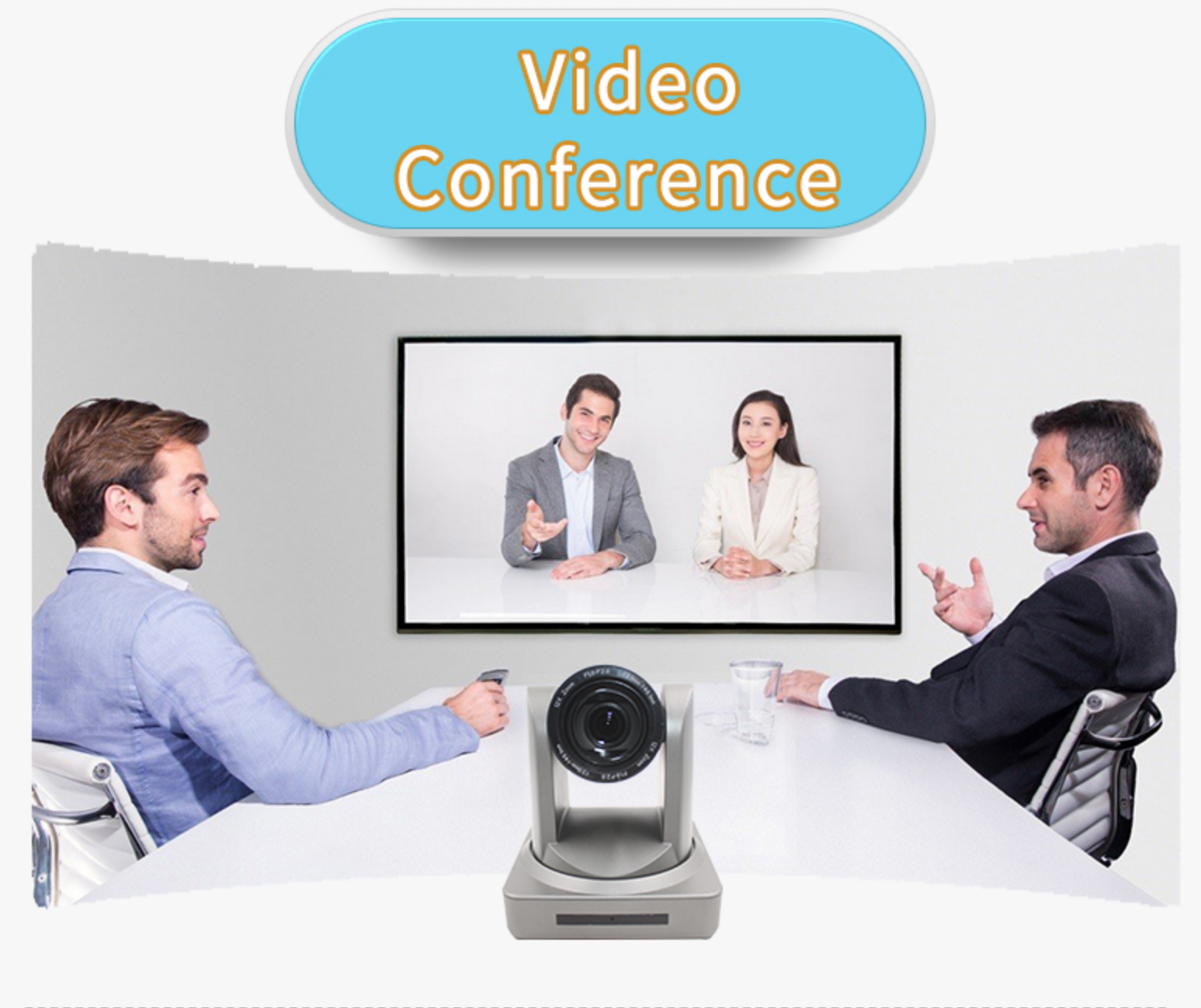
- Church and corporate streaming. The TC420 delivers the control integration most worship and boardroom systems already rely on, including VISCA OVER IP, IP VISCA, and RS422/RS485. Where IMAG screens require 4K resolution, the TC-980S is the stronger option.
- E-commerce and social live selling. The TCHD-T3 is listed for e-commerce streaming with vertical and horizontal screen modes, and its USB 3.0 Type-C output and 1080P60 frame rate match the requirements of platform streaming tools.
- Mobile and temporary installations. All three models use DC 12 V power with AC 110–220 V adapters and are specified for indoor operation at 24/7 duty, which suits temporary training rooms and rented event spaces.
Comparison Table: TC-980S vs TC420 vs TCHD-T3
| Specification | TC-980S | TC420 | TCHD-T3 |
|---|---|---|---|
| Rank in this article | #1 — broadcasting and compliance | #2 — PTZ room integration | #3 — fixed classroom and e-commerce |
| Listed application | Broadcasting, medical, education, live streaming | Medical training, education teaching, event live streaming, broadcasting | Education teaching, e-commerce streaming, medical training |
| Image sensor | 1/2.8 inch CMOS | 1/2.8 inch HD CMOS | 1/2.8 inch CMOS |
| Effective pixel | 8.42M (16:9) | 8.29M (16:9) | 2.07M |
| Video system (top of range) | HDMI 3840×2160; 1080P60 | HDMI 4KP30 / 4KP25; 1080P60 | 1080P@60/50/30/25 fps; 1080i@60/50 |
| Optical / digital zoom | 12X, 20X, 30X / 16X | 12X / 15X | 12x / 16x |
| Video outputs | HDMI, SDI, LAN (PoE+), USB 3.0 | HDMI, SDI, LAN (PoE), USB 3.0 | HDMI 1.4b, LAN (PoE), USB 3.0 Type-C, USB 2.0 Type-A |
| Network protocols | RTSP, RTMP, ONVIF, GB/T28181, SRT; NDI and Dante AV optional | RTSP, RTMP, ONVIF, GB/T28181, VISCA OVER IP, IP VISCA, RTMPS, SRT | TCP/IP, HTTP, RTSP, RTMP, ONVIF, DHCP, Multicast |
| Pan / tilt range | -170° to +170° / -30° to +90° | -170° to +170° / -30° to +90° | Not stated in the published specification |
| Pan / tilt speed | 0.1–60°/s / 0.1–30°/s | 0.1–60°/s / 0.1–45°/s | Not stated; UVC PTZ control supported |
| Presets | Up to 255 (10 via remote) | Up to 255 (10 via remote) | 255 |
| Auto tracking | Yes — 4 modes, up to 18 m | Not listed | Not listed |
| Power | ≤18 W, DC 12 V | <12 W, DC 12 V | DC 12 V (consumption not stated) |
| Signal-to-noise | >50 dB | >50 dB | ≥55 dB |
| Recorded certification | ISO 9001 (064-24-Q-0675-R1-S), ISO 14001 (064-24-E-0676-R1-S), CE EMC (LCSA07075157E) | ISO 9001 (064-24-Q-0675-R1-S), ISO 45001 (064-24-S-0677-R1-S), CE EMC (LCSA07075157E) | ISO 9001 (064-24-Q-0675-R1-S), ISO 45001 (064-24-S-0677-R1-S) |
Frequently Asked Questions
Which TCHD Video live streaming cameras carry CE EMC certification for the EU market?
The TC-980S is certified to CE EMC standards EN 55032:2015/A1:2020 and EN 55035:2017/A11:2020 under certificate number LCSA07075157E, issued by LCS TESTING LABORATORY. The TC420's certificate record also lists CE EMC coverage under the same certificate number. Both are recorded as applicable to the EU market. The TCHD-T3's published certificate record lists ISO 9001 and ISO 45001 rather than a CE EMC entry.
Are the TC-980S, TC420, and TCHD-T3 certified to ISO 9001?
Yes. All three models are covered by a quality management system certificate against GB/T19001-2016/ISO9001:2015, certificate number 064-24-Q-0675-R1-S, issued by BEIJING STANDARD CERTIFICATION CENTRE and applicable to the EU market. The TC-980S is additionally certified to ISO 14001 under GB/T24001-2016/ISO14001:2015, certificate number 064-24-E-0676-R1-S. The TC420 and TC-980S are covered by occupational health and safety certification against GB/T45001-2020/ISO 45001:2018, certificate number 064-24-S-0677-R1-S.
What pan and tilt range do the TC420 and TC-980S support?
Both cameras pan from -170° to +170° and tilt from -30° to +90°, with up to 255 storable preset positions, 10 of which are reachable from the remote control. Pan control speed ranges from 0.1°/s to 60°/s on both models. Tilt control speed reaches 0.1°/s to 45°/s on the TC420 and 0.1°/s to 30°/s on the TC-980S. The TCHD-T3 supports UVC PTZ control and 255 presets, but its published specification does not state a pan or tilt degree range.
Can TCHD Video supply these live streaming cameras under OEM or ODM with a custom logo?
TCHD Video operates an OEM/ODM production model with logo customization. The stated program capacity is 500 units per month with 100% product testing, a minimum order quantity of 1 unit, and remote after-sales support. Export markets for these programs are the EU, South East Asia, and the USA.
What is the lead time, and can I evaluate a sample before placing a larger order?
Lead time is stated as 30 to 45 days, and the minimum order quantity of 1 unit means a single camera can be ordered as an evaluation sample before a larger commitment. TCHD Video publishes a product catalogue covering its live streaming cameras, capture cards, converters, encoders, and switchers, and the sales team can be reached by email at tomzhang@tchdvideo.com or on WhatsApp at +86 19498872019 to confirm model configuration, certification documents for your market, and sample availability.
Conclusion: Choosing Between the Three
For 2026 projects, the ranking follows the deployment rather than a single score. Broadcasters, event producers, and any project where an EU certificate file matters most should start with the TC-980S, which pairs SDI and 4K-capable HDMI output with ISO 9001, ISO 14001, and CE EMC coverage and adds optional NDI and Dante AV transport. Rooms that already have a control system, a joystick, or a switching workflow should look at the TC420, which matches the TC-980S PTZ range, adds the fastest tilt speed in the group, and draws under 12 W while carrying ISO 9001, ISO 45001, and CE EMC certification. Classrooms, lecture halls, and live-selling setups that need a dependable 1080P60 USB camera with the highest signal-to-noise rating in the group should look at the TCHD-T3, accepting that it does not offer SDI or 4K.
Next Step: Match a Camera to Your Project
TCHD Video is a Beijing-based manufacturer of live streaming cameras, video capture cards, video converters, video encoders, and video switchers, established in 2005 and supplying the EU, USA, and Asian markets from a 10,000 m² facility. If you are specifying a camera for education, medical teaching, broadcasting, or event streaming, the fastest way to verify fit is to compare the published specification against your output path and certification requirements.
Download the product catalogue: TCHD Product Catalog 2025 (PDF)
Request a sample or quotation: email tomzhang@tchdvideo.com or message us on WhatsApp (+86 19498872019). OEM and ODM enquiries with logo customization are welcome, with a minimum order quantity of 1 unit and a stated lead time of 30 to 45 days.
Website: www.tchdvideohk.com
Have Questions or Need More Details?
Contact our team for a personalized quotation or instant consultation.
Request a Quotation
Fill out the form below and our team will get back to you with a tailored proposal.
WhatsApp Direct Chat
Prefer to chat in real-time? Message us on WhatsApp for instant assistance & quick answers.
- Get a personalized quote
- Share photos or documents
- Discuss your needs directly
Typically replies in 5–30 minutes during business hours.