
Auditing a 4K Capture Card Supplier: Standards and Warranty
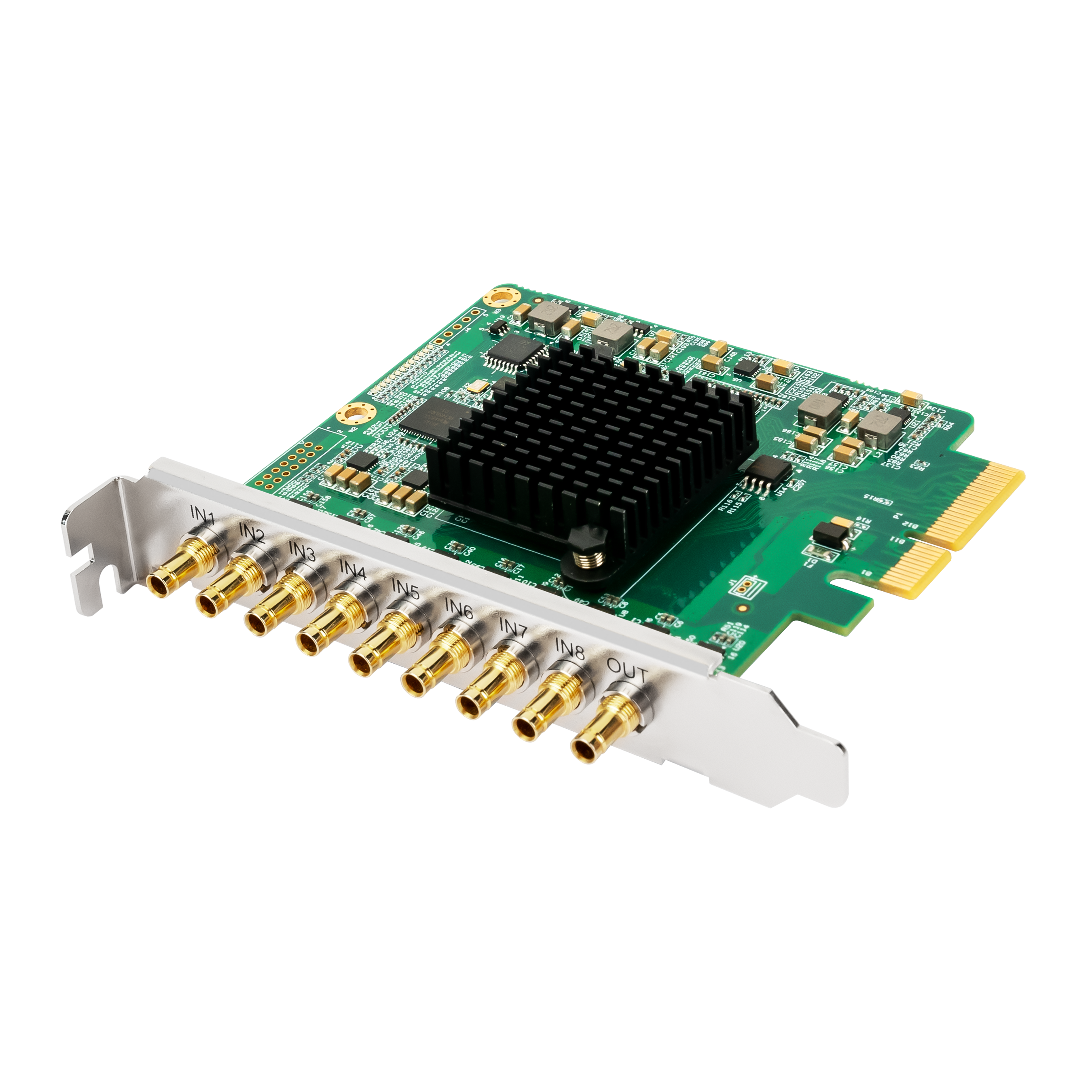
A supplier audit for 4K capture cards comes down to six verifiable domains: documented production standards, signal-integrity design, the scope of safety certifications, UVC/UAC and software compatibility, board and housing material, and written warranty terms. Everything else — sample photos, catalogue copy, trade-show language — is supporting material. This framework uses the TCHD Video TC-200N9 SDI capture and playback card as a worked example of what acceptable evidence looks like.
TCHD Video — legally TCHD Digital Video Technology Development (Beijing) Ltd. — is a Beijing-based manufacturer established in 2005 that produces live streaming cameras, video capture cards, converters, encoders and switchers. It operates a 10,000 m² facility with 50 employees, a 10-engineer R&D team and an annual output of 4,000 units, and exports roughly 20% of production to the EU, USA and Asia. Those numbers matter in an audit because they define what the supplier can actually document, not because they prove quality on their own.
Why Supplier Claims Are Hard to Audit
Most 4K capture card procurement failures are not caused by a card that never works. They are caused by a card that works in the demo and then behaves differently in the third month of continuous use, on a different host machine, or in a dense electrical environment alongside other equipment. The claims made at quotation stage rarely distinguish between those states.
Three specific gaps recur:
- Production claims are unanchored. “Industrial grade” and “strict quality control” describe a process that may or may not have documentation attached to the exact model being purchased.
- Certification claims are unscoped. A certificate exists for a product family, a factory, or a different model. Buyers frequently receive a PDF that does not name the SKU on the purchase order.
- Compatibility claims are untested. “Plug and play” is a behaviour, not a specification. It has to be demonstrated on the operating systems and software the buyer will actually run.
The technical reason these gaps matter is bandwidth. An uncompressed 4K 60Hz RGB 24-bit stream requires approximately 11.94 Gbps, which exceeds the 5 Gbps limit of USB 3.0. Any supplier describing a 4K capture path is therefore describing a specific combination of interface, compression and processing architecture — and that combination is exactly what an audit should force into the open.
Industry Background: Why the Audit Bar Has Risen
The capture card category has moved from enthusiast accessory to infrastructure component, and procurement expectations have followed. Dataintelo’s capture card market research values the global market at USD 1.31 billion in 2024 and projects USD 3.37 billion by 2033 at a 12.4% CAGR. Within that, USB capture cards held the largest product-type share at 38.4% in 2025, while the medical imaging and industrial segments together accounted for 19.4% of video capture card revenue with an 11.8% segment CAGR through 2034.
Two consequences follow for buyers. First, the volume end of the market is USB-based, so USB compatibility evidence is now a baseline requirement rather than a bonus. Second, the fastest-growing segments are the ones with the least tolerance for field failure — medical imaging, industrial vision, broadcast-adjacent production. A card that drops frames during a game stream is an inconvenience; a card that drops frames during a recorded procedure or a live multi-camera broadcast is an operational incident.
The standard that makes plug-and-play auditable is UVC, the USB Video Class. UVC allows a capture device to function as a plug-and-play webcam without proprietary drivers — which means compatibility can be tested by enumeration, not by trusting a compatibility list.
The Six-Domain Audit Framework
1. Production standard evidence
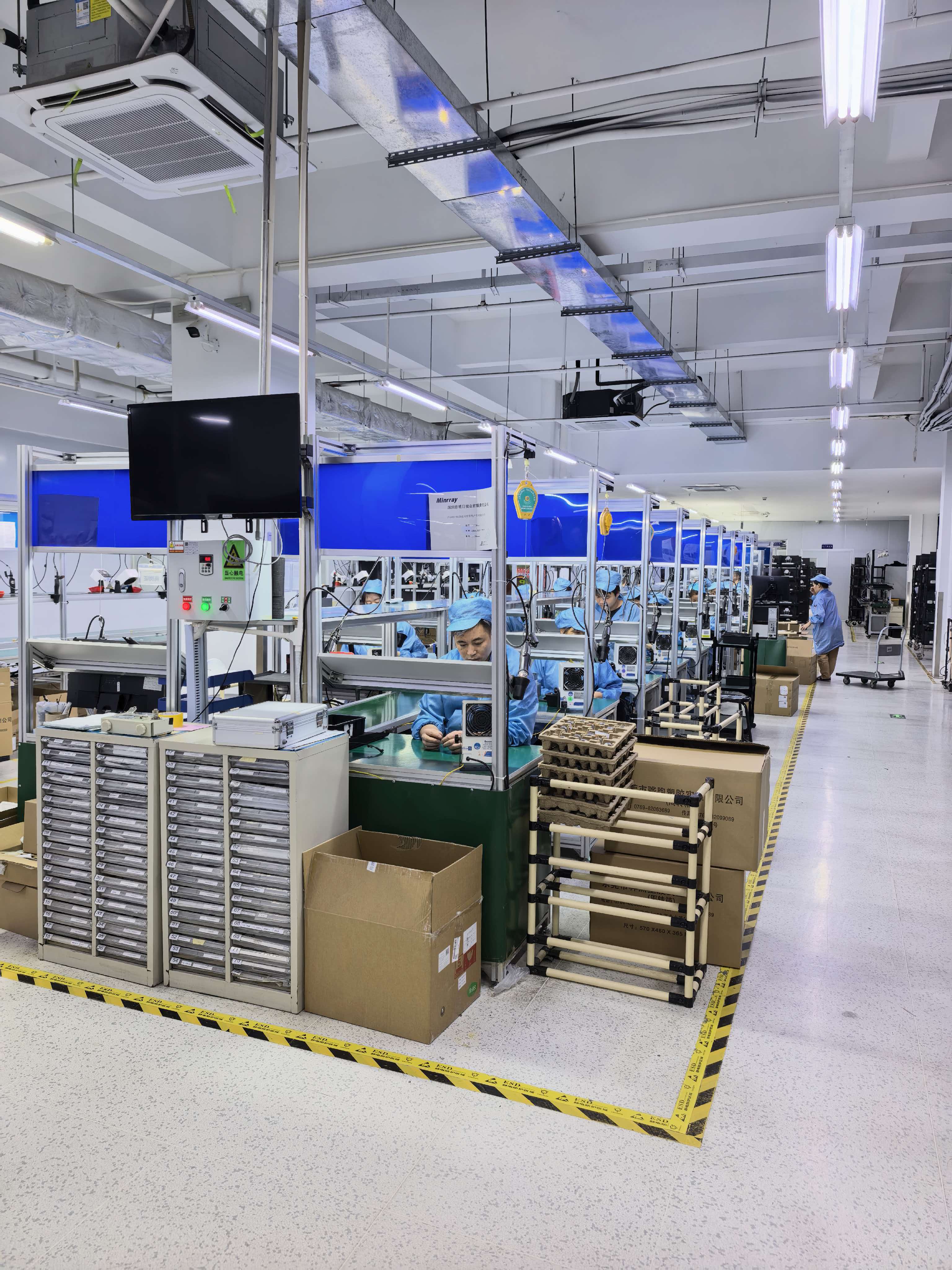
Ask for the production standard that applies to the specific model, and ask who signed it. A usable answer names the model, the standard, and the inspection stage at which it is applied. TCHD Video’s specification for the TC-200N9 SDI states that the card is produced under strict industrial production standards and is certified with mainstream safety certifications, with a standard after-sales warranty covering daily commercial and industrial long-term use. In an audit, that statement is the starting point for a document request, not the conclusion.
2. Signal integrity and anti-interference design
The TC-200N9 SDI is specified with a high-strength circuit board and an anti-interference design intended to support long-term continuous operation. It is further specified for anti-static and anti-signal-interference performance, which is the property that keeps signal transmission stable in complex environments. These are the claims most worth stress-testing, because interference failures are intermittent and rarely appear in a short demo.
The processing side of the same claim is measurable. The TC-200N9 performs real-time uncompressed SDI video capture and output with zero frame drop and ultra-low transmission latency, and it handles embedded SDI audio synchronously so that audio and video stay aligned. Professional broadcast colour sampling is used to restore accurate colour. A supplier that can explain how those properties are achieved — not just that they exist — is a supplier that understands its own board.
3. Certification: check the scope, not the logo
Certification is the domain where buyers most often accept a document they have not read. The audit question is not “do you have certificates” but “does the certificate name this model, this factory and this standard”. TCHD Video’s TC-200N9 SDI specification refers to mainstream safety certifications; buyers should obtain the certificate copies and confirm the model designation matches the SKU being ordered. Where a certificate is issued against a management system rather than a product, treat it as process evidence, not product evidence. That distinction matters in tender documentation and in medical or industrial procurement, where the buyer’s own compliance file has to stand up to a later review.
Customs classification is a separate but related check. TCHD products are classified under HS Code 8471.80 (automatic data processing units) and 8525.80 (television/digital cameras), and the code on the commercial invoice should match the product being shipped.
4. UVC/UAC compliance and software compatibility
UVC and UAC compliance should be verified at two levels: the claim and the behaviour. On the claim level, TCHD Video specifies that the TC-UB620 USB 4K capture card is compliant with the USB Video Class (UVC) standard and the USB Audio Class (UAC) standard. On the behaviour level, the TC-200N9 SDI is specified for driver-free recognition, full compatibility with Windows and macOS, and plug-and-play operation with OBS, vMix, Premiere and After Effects.
A practical audit test is to connect the card to a clean machine with no vendor software installed, confirm it enumerates as a standard video device, capture for a sustained period at the target resolution and frame rate, and check audio/video synchronisation at the end of the run rather than the beginning. Software compatibility lists are useful for shortlisting; only enumeration and a long capture prove the claim.
5. Board and housing material
Material declarations are cheap to make and easy to check. The TC-200N9 SDI is specified with a PCB board material. TCHD Video’s USB models specify full-aluminium alloy housings — the TC-UB620 and TC-UB660 are both aluminium alloy — which is a heat-dissipation decision as much as a cosmetic one for continuous streaming. Ask for the material declaration in writing and confirm it against the physical sample; a specification table that says aluminium and a sample that flexes like plated plastic is a red flag about the whole document set.
6. Warranty and after-sales terms
“Standard after-sales warranty” is the phrase most suppliers use and the phrase least useful to a buyer. The audit should convert it into specifics: warranty duration, what is covered, what voids coverage, the replacement versus repair route, the RMA address, and the response commitment. The TC-200N9 is specified as supporting daily commercial and industrial long-term use under a standard after-sales warranty; the buyer’s job is to attach terms to that sentence before the purchase order is signed.
Step-by-Step Audit Sequence
- Fix the model and revision. Audit one SKU, not a product family. Record the exact model designation — for example TC-200N9 SDI — and require the same designation on the quotation, invoice and certificate.
- Request the production standard document. Confirm it names the model and the inspection stage.
- Request certification copies. Match model designation, standard number and issuing body.
- Confirm HS classification in writing. The invoice code, the product and the declared description should agree.
- Request the interface and processing specification. Standards supported, resolution and frame rate, latency behaviour, audio handling.
- Request the UVC/UAC position. Compliant, partially compliant, or proprietary driver required — stated per model.
- Request the material declaration. Board material and housing material, per model.
- Run an enumeration test on a clean host. No vendor software installed; confirm the device appears as a standard video device.
- Run a sustained capture test. Long enough to expose thermal and interference behaviour, with audio sync checked at the end.
- Repeat on the second operating system. If the deployment spans Windows and macOS, test both; the TC-200N9 is specified for both.
- Convert warranty language into terms. Duration, coverage, RMA route, response commitment.
- Confirm capacity and repeat-order terms. Production footprint, output volume, packaging and delivery schedule confirmation in writing.
Steps 1 to 7 are desk work and can be completed before a sample is ordered. Steps 8 to 10 require a physical unit. Steps 11 and 12 should be closed before the first volume order, because they are the terms that determine what happens in year two rather than week one.
Use Cases: Where the Audit Emphasis Changes
The same six domains apply across applications, but the weight shifts. The table below maps common deployment scenarios to the audit point that most often decides success.
| Scenario | Audit emphasis | Relevant verified capability |
|---|---|---|
| Multi-platform live streaming and e-commerce live 4K capture card deployments | UVC/UAC compliance, enumeration stability, sustained thermal behaviour | TC-200N9 SDI: driver-free recognition, Windows and macOS, OBS and vMix compatibility |
| Broadcast multi-camera, virtual studio, concert and sports event live 4K capture card work | Signal standard coverage, latency behaviour, audio synchronisation | TC-200N9 SDI: SD-SDI, HD-SDI and 3G-SDI; 1080p60; real-time uncompressed capture with zero frame drop; embedded SDI audio sync |
| Esports tournament and game console recording 4K capture card use | Frame-rate stability under sustained load, pass-through behaviour | TC-UB660: USB 3.2 Gen 2, HDMI 2.1, capture up to 4K@144fps |
| Medical imaging 4K capture card, endoscope surgery 4K capture card, telemedicine consultation and dual-channel medical recording | Continuous-operation stability, interference resistance, model-scoped documentation | TC-200N9 SDI: high-strength circuit board, anti-interference design, anti-static and anti-signal-interference performance; medical imaging listed as an application scenario |
| Lecture recording, remote education and campus TV production | Software compatibility, driver-free deployment across mixed fleets | TC-200N9 SDI: driver-free recognition with OBS, vMix, Premiere and After Effects |
| Video conference, enterprise meeting recording and conference streaming | Audio path verification, long-session stability | TC-200N9 SDI: embedded SDI audio synchronous acquisition and output |
Two patterns are worth noting. First, the scenarios with the highest consequence of failure are also the ones where interference resistance matters more than peak resolution — a medical or broadcast deployment is more damaged by a dropped frame than by a lower frame rate. Second, multi-site deployments shift the burden onto driver-free behaviour, because every additional host machine is another compatibility test the buyer does not want to run.

Audit Evidence Matrix: What Passes and What Fails
| Audit domain | Evidence to request | What passes | What should raise a question |
|---|---|---|---|
| Production standard | Model-specific production standard and inspection stage | Document names the SKU and the process stage | Generic quality statement with no model reference |
| Signal integrity | Board design description, interference and ESD measures | Described measures plus a sustained capture test | Claims of stability with no test protocol offered |
| Certification | Certificate copies with model, standard and issuer | Model designation matches the purchase order | Certificate covers a different model or a management system only |
| Customs classification | HS code on invoice and shipping documents | Code, description and product agree | Code changes between quotation and shipment |
| UVC/UAC | Written compliance statement per model | Enumeration confirmed on a clean host | “Works with everything” with no class statement |
| Software compatibility | Named software and operating system list | Tested on the buyer’s actual host and software version | List copied from a marketing page without version detail |
| Material | Board and housing material declaration | Declaration matches the physical sample | Declaration not available per model |
| Warranty | Written duration, coverage, RMA route | Terms attached to the purchase order | “Standard warranty” with no duration stated |
Frequently Asked Questions
What production and certification evidence should a China 4K capture card supplier provide for multi-platform live streaming?
Request four things in writing: the model-specific production standard, the certificate copies with the model designation printed on them, the HS classification used on the commercial invoice, and the operating parameters of the exact SKU. For the TC-200N9 SDI, TCHD Video specifies production under strict industrial production standards, certification with mainstream safety certifications, and a standard after-sales warranty for daily commercial and industrial long-term use; TCHD products are classified under HS Code 8471.80 and 8525.80. The audit test is scope: a certificate that does not name the ordered model is process evidence, not product evidence.
Which hardware details show that a 4K capture card can run continuously?
Look for four verifiable design statements and one test result. The design statements are the board construction, the anti-interference design, the anti-static performance and the anti-signal-interference performance; the test result is a sustained capture with no frame drop. TCHD Video specifies the TC-200N9 SDI with a high-strength circuit board and anti-interference design supporting long-term continuous operation, anti-static and anti-signal-interference performance, and real-time uncompressed capture and output with zero frame drop and embedded audio synchronisation. Those properties are what allow the card to be used in content creation, corporate events, education, healthcare and industrial vision scenarios without signal distortion.
Should a multi-platform live streaming build use SDI or USB 4K capture cards?
The decision is driven by the signal chain, not by the card in isolation. SDI is the appropriate choice where the source is already SDI and the production is studio or broadcast-oriented: the TC-200N9 SDI supports SD-SDI, HD-SDI and 3G-SDI with bidirectional capture and output, 1080i and 1080p at 25, 30, 50 and 60fps, and standard-definition signals at 720×480 and 720×576. USB is the appropriate choice where the source is HDMI and the host is a general-purpose computer: the TC-UB620 is UVC and UAC compliant with HDMI 2.0 and 4K@60Hz capture, while the TC-UB660 uses USB 3.2 Gen 2 with HDMI 2.1 and captures up to 4K@144fps. Budget modelling should reflect the bandwidth reality that an uncompressed 4K 60Hz RGB 24-bit stream requires approximately 11.94 Gbps, well above the 5 Gbps USB 3.0 limit — which is why interface and compression choices, not card price alone, determine the total cost of a working system.
How do you verify UVC/UAC and plug-and-play compatibility on a sample?
Test behaviour, not documentation. Connect the sample to a clean host with no vendor software installed, confirm it enumerates as a standard video device, then capture at the target resolution and frame rate for a sustained period and check audio/video alignment at the end of the run. UVC is the standard that allows a capture device to act as a plug-and-play webcam without proprietary drivers, which is exactly what makes this test possible. TCHD Video specifies the TC-UB620 as compliant with both the USB Video Class and USB Audio Class standards, and specifies the TC-200N9 SDI for driver-free recognition with Windows and macOS and plug-and-play operation in OBS, vMix, Premiere and After Effects. On the sample, also confirm the material declaration against the unit itself: PCB for the TC-200N9 SDI, aluminium alloy housings for the TC-UB620 and TC-UB660.
What should be confirmed in writing before scaling from a sample to repeat orders?
Close five items: the frozen model and revision, the warranty terms including duration and RMA route, the packaging and HS documentation, the production capacity behind the order, and the named commercial contact. TCHD Video operates a 10,000 m² facility with 50 employees, a 10-engineer R&D team and an annual output of 4,000 units, with roughly 20% of production exported to the EU, USA and Asia — figures that should be matched against the order volume and the delivery schedule before a repeat commitment. Buyers can request a sample or quotation through the TCHD Video website, review the full product range in the TCHD Product Catalog 2025 (download the catalog PDF), or contact Leo Chen at tomzhang@tchdvideo.com or +86-13910334207.
Conclusion
An audit that produces documents is worth more than a demo that produces impressions. The six domains in this framework — production standard, signal integrity, certification scope, UVC/UAC and software behaviour, material declaration, and warranty terms — convert supplier language into items a buyer can verify, file and defend later.
The TC-200N9 SDI shows what a well-documented answer looks like: a high-strength circuit board with anti-interference design for long-term continuous operation, anti-static and anti-signal-interference performance, real-time uncompressed capture with zero frame drop and synchronous embedded audio, driver-free recognition on Windows and macOS, strict industrial production standards with mainstream safety certifications, and a standard after-sales warranty. None of those statements replaces a sample test — but together they define exactly what the sample test is supposed to confirm.
Next step
Request a TC-200N9 SDI sample or a written quotation with model-specific documentation attached. TCHD Video, TCHD Digital Video Technology Development (Beijing) Ltd., Room#411, Building#1, Yard#9, Lianqiao 2nd street, Haidian district, Beijing, China. Email tomzhang@tchdvideo.com · Tel +86-13910334207 · WhatsApp +86 19498872019 · www.tchdvideohk.com
Have Questions or Need More Details?
Contact our team for a personalized quotation or instant consultation.
Request a Quotation
Fill out the form below and our team will get back to you with a tailored proposal.
WhatsApp Direct Chat
Prefer to chat in real-time? Message us on WhatsApp for instant assistance & quick answers.
- Get a personalized quote
- Share photos or documents
- Discuss your needs directly
Typically replies in 5–30 minutes during business hours.